
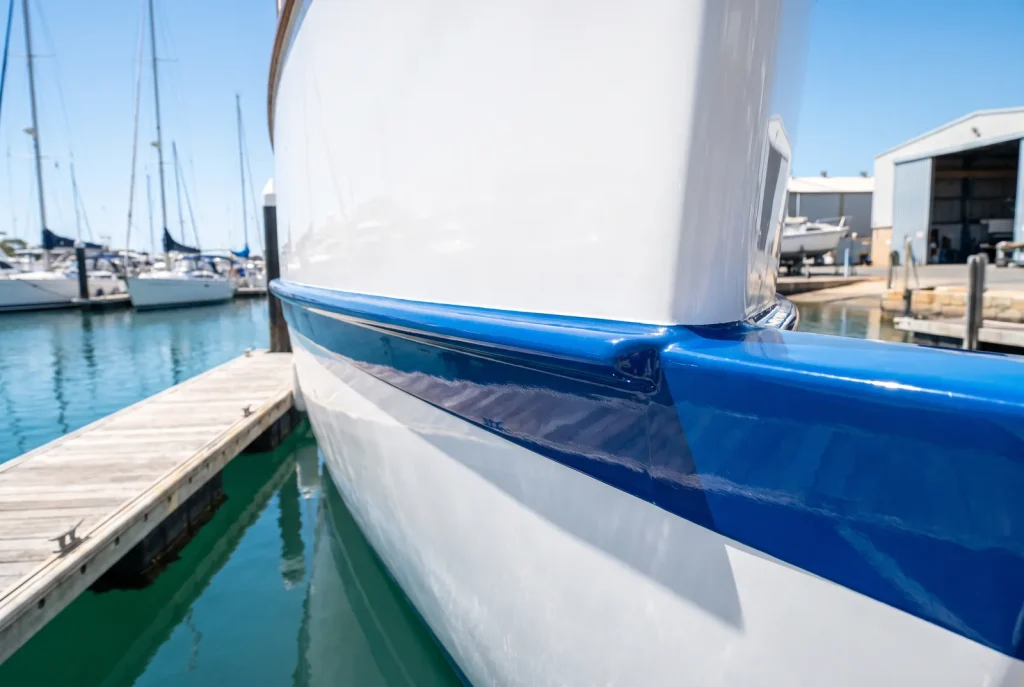
You wash the boat, dry it off, and step back expecting that mirror-like finish – but the hull still looks faded, milky and lifeless. That chalky surface is not stubborn dirt, and it will not come off with soap and a sponge. It is oxidation, and treating it takes a different approach entirely. A skilled exterior detailing company can tell the difference between surface grime and true gelcoat breakdown, then treat each one correctly rather than scrubbing at a problem that no amount of washing will solve.
Why Marine Surfaces Lose Their Shine
Gelcoat, fibreglass and painted finishes all rely on a smooth, reflective outer layer to look glossy. Over time, that layer degrades. The main culprit is ultraviolet light, which breaks down the resins that hold the surface together.
As the top layer of gelcoat deteriorates, it releases a fine powder. Run your hand across a badly oxidised hull and you will often see a chalky residue on your palm. This is called chalking, and it scatters light instead of reflecting it – which is exactly why the surface looks flat and dull.
Coloured gelcoat and painted surfaces also fade. Dark blues, reds and greens are especially prone to losing depth and turning pale or patchy. Under Perth’s strong sun, this fading can appear faster than many owners expect, particularly on boats stored uncovered.
Telling Surface Grime Apart From Genuine Oxidation
Not every dull-looking hull is oxidised. Sometimes the finish underneath is still healthy and simply buried under road film, salt haze or environmental grime. Knowing which problem you are dealing with matters, because the fix is completely different.
- Surface grime lifts with proper washing and leaves the gloss intact underneath. If a clean, wet panel looks shiny again, the finish is largely sound.
- Oxidation stays dull even when the surface is clean and wet. The chalky feel, the faded colour and the lack of reflection all remain after washing.
A quick test is to wipe a small area with a damp cloth. If colour transfers to the cloth and the spot briefly looks glossier, oxidation is present. This is the point where washing stops helping and restoration begins.
The Restoration Process Step by Step
Restoring gloss to an oxidised surface means removing the dead, degraded outer layer to reveal the sound gelcoat or paint beneath. This is done in stages, working from more aggressive to gentler as the surface improves.
- Assessment and cleaning. The surface is thoroughly cleaned first so that grime is not mistaken for oxidation, and the depth of damage is judged.
- Compound cutting. A cutting compound, applied by hand or machine, abrades away the oxidised layer. Heavier oxidation calls for a more aggressive compound and a slower, controlled pass.
- Machine polishing. Once the oxidation is removed, polishing refines the finish, eliminates the fine haze left by cutting and builds up genuine depth of shine.
- Final refinement. A lighter polish can bring stubborn colours back to life and produce that clear, wet-look gloss.
The goal is to remove only as much material as necessary. Skilled operators read the surface as they work, adjusting pad, product and speed rather than blindly grinding away good gelcoat.
Matching Technique to Material
A boat is rarely a single surface. Restoration has to respect the different materials on board, because a technique that suits one can damage another.
- Gelcoat and fibreglass respond well to compounding and polishing, since there is usually enough thickness to work with.
- Painted surfaces are thinner and less forgiving, so lighter compounds and careful machine control are essential to avoid burning through.
- Stainless steel fittings need dedicated metal polishes to lift tarnish and restore reflectivity without leaving swirl marks.
- Aluminium trim oxidises differently and calls for products formulated for that metal rather than the same compound used on the hull.
Treating every surface the same is one of the fastest ways to create new problems. Matching the method to the material is what separates a genuine restoration from a rushed buff.
Why Perth Conditions Speed Up Dulling
Perth delivers a demanding combination for marine finishes. The UV intensity across the warmer months is among the harshest in the country, and salt-laden air off the coast adds a corrosive element that works on metals and accelerates surface breakdown.
For boats kept on swing moorings, marina berths or open trailers, this means oxidation tends to return sooner than it would in milder climates. Restoration is not a one-time cure here – it is a reset that needs to be maintained. Understanding this helps set realistic expectations about how often a hull will need attention.
Locking In the Restored Shine
Bringing back the gloss is only half the job. A freshly polished surface is also freshly exposed, and without protection it will begin oxidising again straight away. Sealing the restored finish is what makes the effort worthwhile.
Protective options range from traditional marine waxes and sealants through to ceramic coatings. Ceramic products form a harder, longer-lasting barrier that resists UV and salt better than wax, which is why they are increasingly popular for boats facing tough conditions. Whatever the choice, the principle is the same: shield the surface so the sun and salt take longer to dull it again.
Restoration works best as the foundation of an ongoing surface-care routine rather than a stand-alone rescue. Once the shine is back and protected, regular washing and periodic maintenance keep it there for far longer. If your hull has lost its lustre and washing no longer helps, a professional assessment is the sensible starting point – it identifies how much oxidation is present, how much finish remains to work with, and what protection will hold up best against Perth’s sun and salt.