
The last trip of the season carries a quiet finality. Your boat has spent months absorbing Perth sun, salt spray and the general grime of active use, and now it faces weeks or months of sitting still. That gap between the final run and the next launch is where surface condition is either protected or lost, and getting the fundamentals right before the boat sits idle is where a boat detailing service earns its keep. The end of the season is not the time to walk away from the boat – it is the moment that matters most.
Prefer to watch or listen?
Listen onApple Podcasts
Why the End of Season Is the Highest-Risk Period
Damage does not stop when the boat stops moving. Salt residue left on gelcoat, stainless and canvas keeps drawing moisture and slowly etching surfaces. Organic matter – algae, bird droppings, marine growth – continues to break down finishes wherever it settles.
UV exposure works differently. A summer of sun can leave gelcoat and trim primed for degradation that only becomes visible during storage, as oxidation sets in on surfaces already stressed by months of light. Trapped moisture in enclosed spaces adds to the risk, feeding mildew and material breakdown while the boat sits unused.
In short, an idle boat is not a safe boat. The contaminants left behind at season’s end keep working long after the last outing.
Deep Decontamination Before Storage
A quick rinse is not enough to shut down these processes. Post-season care begins with thorough decontamination – the deliberate removal of everything that would otherwise sit and degrade surfaces through the quiet months.
That means flushing salt from every surface it clings to, not just the obvious ones. It also means lifting embedded contaminants that a standard wash leaves behind, and clearing organic buildup from waterline, hull and shaded corners where it accumulates. This is the same attention to fundamentals covered in preparing your boat for the summer boating season, applied in reverse – clearing the slate rather than getting ready to use it.
Decontamination gives every protective step that follows a clean surface to work with. Applying protection over trapped salt or grime simply seals the problem in.
Protecting Vulnerable Materials During Downtime
Different materials fail in different ways when left unattended. Each deserves its own consideration before the boat is put away:
- Gelcoat and fibreglass – the most exposed surfaces, prone to oxidation and dulling once protective layers wear thin. A clean, sealed finish resists the slow chalking that sets in during storage.
- Stainless and aluminium trim – vulnerable to staining and corrosion where salt lingers. Thorough cleaning and a protective barrier keep tea-staining and pitting at bay.
- Teak – dries, greys and cracks without care, and the off-season is a long stretch of exposure to weather it through.
- Canvas and upholstery – hold moisture and salt readily, making them prime candidates for mildew and fading if stored damp or dirty.
Treating each material for how it actually degrades is what separates real post-season care from a general tidy-up.
The Role of Protective Coatings
Protective coatings earn their value most during periods of limited use. When a boat sits idle, there is no regular wash-down to catch problems early, so the coating itself becomes the boat’s first line of defence against UV, salt and moisture.
Ceramic options and other durable coatings create a barrier that holds up through months without attention. They shed water and contaminants more readily and slow the oxidation that dormant UV damage would otherwise accelerate. The aim is simple: bridge the gap so surfaces arrive at the next season in close to the condition they left the water.
A well-protected surface also makes the eventual return to use far easier, since less grime bonds to a treated finish over the downtime.
Interior and Enclosed-Space Care
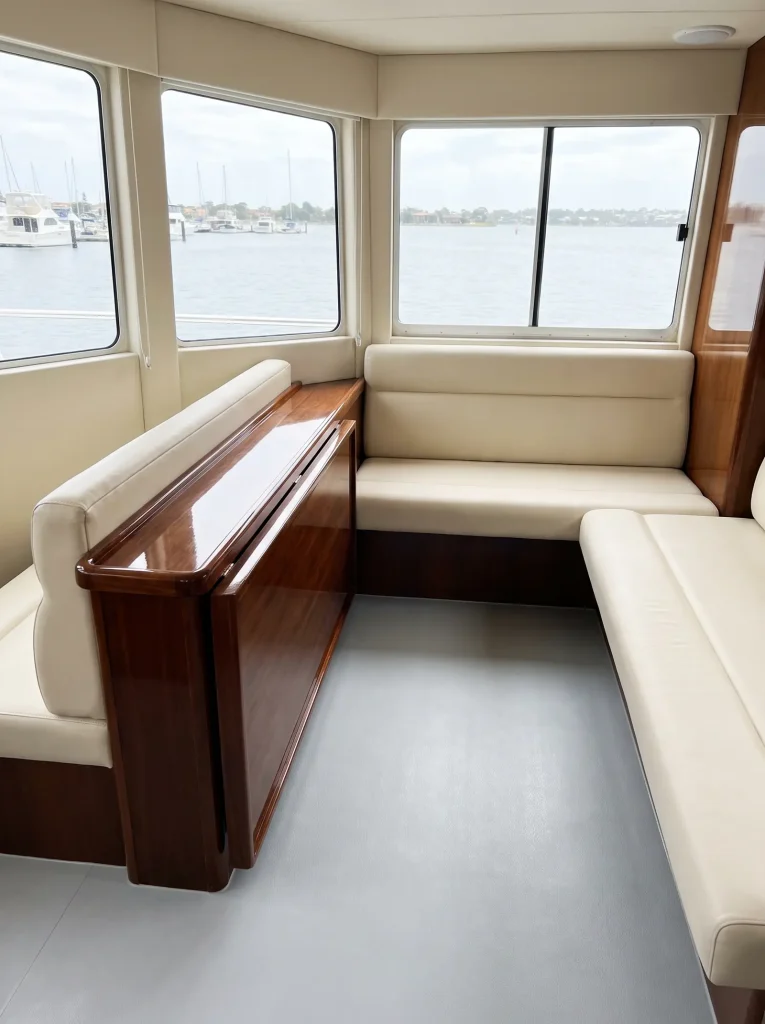
Interiors suffer quietly. A closed cabin or console traps humidity, and Perth’s shifting off-season conditions do the rest – warm days and cool nights encourage condensation that lingers in fabrics, foam and enclosed lockers.
The result is mildew, musty odour and gradual material breakdown that is far harder to reverse than to prevent. Before storage, interiors should be cleaned, fully dried and left with some means of managing moisture and airflow. Removing anything that holds damp – cushions, cloths, life jackets stowed wet – takes away the fuel that mildew needs.
An interior left clean and dry is an interior that will not greet you with a problem on the first day back.
Positioning the Boat for an Easy Return
Good post-season care pays off at the start of the next season. A boat that was decontaminated, protected and stored clean needs far less remedial work before it goes back in the water. There is no oxidation to correct, no mildew to strip, no set-in staining to chase.
That is the real purpose of winding down properly – not just protecting the boat while it sits, but shortening the path back to using it. The effort spent at season’s end is effort you do not have to repeat, twice over, when the water calls again.
Protecting the Investment Through the Quiet Months
Post-season care is about holding on to what you already have. Every hour spent decontaminating, protecting and drying is an hour that stops accumulated salt, UV and moisture from quietly undoing a season’s worth of condition while the boat sits idle.
Consistent attention at both ends of the cycle – winding down carefully and gearing up thoroughly – is what keeps a Perth vessel in lasting condition. Nothing is lost to neglect when the quiet months are treated with the same care as the busy ones.