
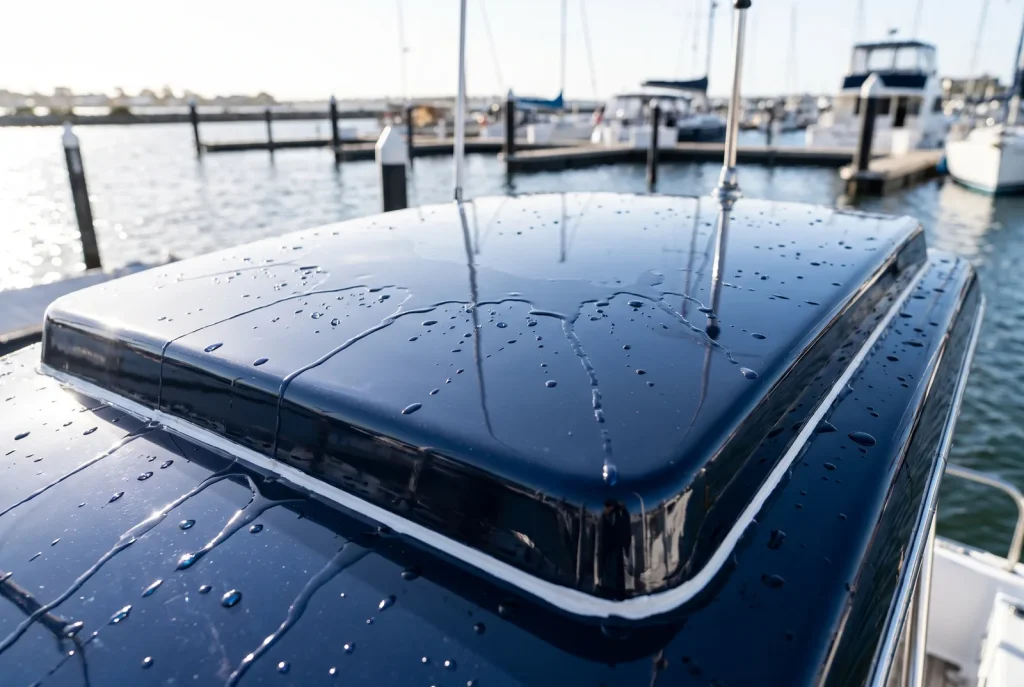
Perth boat owners frequently discover their gelcoat developing a dull, chalky appearance much sooner than anticipated, especially when stored near the coast. This accelerated deterioration isn’t coincidental – it’s the result of specific chemical processes that make salt-laden air particularly aggressive toward gelcoat surfaces. Understanding these mechanisms helps explain why professional boat cleaning and detailing services emphasise the importance of addressing salt air exposure promptly and systematically.
01 – The Chemistry of Salt Air Attack on Gelcoat
Salt air contains microscopic sodium chloride crystals suspended in water vapour, creating a highly corrosive environment for gelcoat surfaces. When these salt particles settle on your boat’s surface, they immediately begin absorbing moisture from the surrounding air through a process called deliquescence. This creates concentrated brine droplets that remain active even when the surface appears dry.
The gelcoat itself consists of polyester resin reinforced with glass fibres, designed to create a protective barrier. However, salt water penetrates the microscopic pores in the gelcoat matrix, where it begins breaking down the polymer chains through ionic attack. Chloride ions are particularly aggressive, disrupting the cross-linked structure that gives gelcoat its strength and gloss.
This chemical breakdown occurs at the molecular level, where salt ions interfere with the ester bonds holding the resin together. As these bonds weaken, the surface becomes increasingly porous, allowing deeper penetration of salt and moisture. The process becomes self-perpetuating as each cycle of exposure creates more pathways for future damage.
02 – Why Perth’s Coastal Environment is Particularly Aggressive
Perth’s unique coastal conditions create an especially challenging environment for gelcoat preservation. The combination of consistent sea breezes and relatively low humidity means salt particles remain airborne longer, travelling significant distances inland. This extends the zone of salt air exposure well beyond the immediate waterfront areas.
The city’s position on the Indian Ocean exposes boats to prevailing westerly winds that carry concentrated salt spray. Unlike more sheltered harbours, Perth’s open coastal exposure means boats face constant salt air circulation, even in supposedly protected marina berths. The Fremantle Doctor, Perth’s famous afternoon sea breeze, delivers a daily dose of salt-laden air to boats stored throughout the metropolitan area.
Temperature fluctuations between day and night in Perth’s Mediterranean climate create additional stress on gelcoat surfaces. As temperatures drop, moisture condenses on surfaces, activating any salt residue present. This daily cycle of wetting and drying accelerates the chemical attack process, making Perth’s environment particularly harsh for gelcoat maintenance.
03 – Visual Signs That Indicate Salt Air Damage
Salt air damage manifests differently from other forms of gelcoat deterioration, creating specific visual and tactile indicators. The most common early sign is a gradual loss of gloss, where the surface appears increasingly matte despite cleaning efforts. This differs from UV-related chalking, which typically shows more uniform whitening across exposed areas.
Touch reveals another distinctive characteristic of salt air damage – a slightly rough texture that feels gritty under fingertips. This roughness results from microscopic pitting where salt crystals have etched into the gelcoat surface. The affected areas often retain dirt and grime more readily than surrounding surfaces, creating an increasingly dull appearance that can be worsened by mineral deposits left after rinsing.
Advanced salt air damage shows as visible crazing or fine crack networks, particularly around stress points like cleats and hardware mounting areas. These hairline cracks follow no particular pattern, distinguishing them from stress-related cracking which typically radiates from mounting points. The cracks often appear slightly darker than the surrounding gelcoat due to accumulated contamination.
04 – The Progressive Nature of Gelcoat Deterioration
Salt air damage follows a predictable progression that accelerates over time. Initial exposure creates microscopic surface roughening that’s barely visible but measurable through gloss readings. This roughening provides more surface area for salt particle adhesion, beginning the self-reinforcing cycle of deterioration.
As damage progresses, the compromised surface develops increased porosity, allowing salt penetration deeper into the gelcoat structure. This subsurface damage becomes irreversible, as the affected resin loses its structural integrity permanently. The timeline for this progression varies with exposure intensity, but Perth’s coastal conditions can advance this process significantly faster than inland storage.
The final stage involves visible surface breakdown where the gelcoat can no longer maintain its protective function. At this point, the underlying fibreglass becomes vulnerable to moisture penetration, potentially leading to more serious structural issues. Understanding this progression emphasises the importance of early intervention in salt air environments.
05 – Prevention Strategies for Salt Air Exposure
Effective salt air protection requires understanding the mechanisms behind the damage. Regular fresh water rinsing removes salt deposits before they can establish concentrated brine cells on the surface. This simple intervention interrupts the deliquescence process that creates the aggressive chemical environment.
Timing proves crucial for rinsing effectiveness. Salt particles become increasingly difficult to remove as they absorb atmospheric moisture and bond with surface contaminants. Daily rinsing in high-exposure areas provides significantly better protection than weekly treatments, as it prevents the establishment of persistent salt deposits.
Protective barriers create another defence layer against salt air attack. Quality marine waxes and sealers provide a sacrificial layer that absorbs the initial chemical attack, protecting the underlying gelcoat. However, these protective layers require regular renewal as they gradually break down under salt air exposure, particularly in Perth’s intense marine environment.
While salt air creates the foundation for gelcoat breakdown, the combination with Perth’s intense UV exposure and oxidation in WA summers creates an even more aggressive deterioration process.