
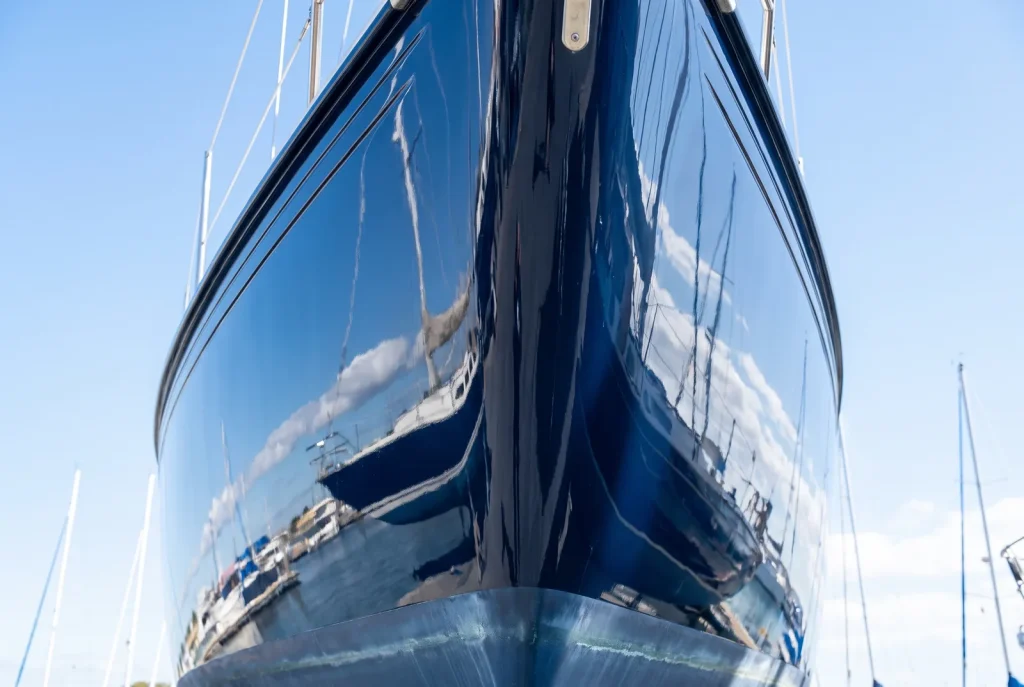
Ask ten boat owners what detailing means and many will describe a thorough wash. It’s an easy assumption to make. But a good wash and a full detail sit at very different levels of care. Professional boat detailing in Perth goes far beyond cleaning the surface; it corrects, restores and protects the material itself. Treating the two as interchangeable is one of the most common reasons gelcoat fades faster than it should around our coast.
This article breaks down what each service actually does, how the outcomes compare, and how to recognise which one your boat needs right now.
What Boat Washing Actually Involves
Washing is surface-level work. Its job is to lift and remove what sits on top of the finish: salt residue, grime, dust, bird mess, light marine film and loose contaminants picked up on the water.
A proper wash uses marine-safe products, clean water and the right technique to avoid scratching. Done regularly, it keeps your hull and topsides looking presentable and stops salt and dirt from building into something harder to shift.
But washing only deals with what’s on the surface. It cannot reach into the material to repair damage that has already taken hold. Once you rinse and dry, you’re left with a clean version of whatever condition the finish was already in.
What Boat Detailing Involves
Detailing works at the material level. Instead of simply removing contaminants, it addresses the condition of the gelcoat, paint and surfaces themselves.
That means correcting fine scratches and swirl marks, removing oxidation, cutting back the dull chalky layer that forms on tired gelcoat, polishing to restore clarity and gloss, then sealing the surface with protective products. If you want the full picture of what a professional detail actually includes, it’s worth understanding each of these steps. The result isn’t just a clean boat; it’s a restored and shielded one.
Where washing maintains appearance, detailing changes condition. It can bring back colour and shine that a wash will never touch, because the problem isn’t dirt on top of the finish. The problem is the finish itself.
Comparing the Two Side by Side
The clearest way to understand the gap is to look at depth of work and how long the results last.
A wash is fast, frequent and shallow by design. It restores cleanliness, and the effect lasts until the next round of salt and grime settles in, which in Perth can be a matter of days.
A detail is slower, less frequent and far deeper. It restores the actual surface and applies protection, so the results hold for months rather than days. You’re not just buying a clean look; you’re buying a barrier between your gelcoat and the harsh marine environment.
Think of it this way: washing manages the surface, detailing manages the material. One keeps your boat tidy. The other keeps it from ageing prematurely.
Why Washing Alone Can’t Reverse UV Fade
Perth’s marine conditions are tough on boats. Strong UV, salt-laden air and long hours on the water break down unprotected gelcoat. Over time this shows up as fading, chalkiness and a dull, lifeless surface.
This damage is chemical and physical, not just dirty. UV breaks down the surface layer of the gelcoat, and salt accelerates the process. No amount of washing reverses that. You can scrub a faded hull until it’s spotless and it will still look faded, because the colour loss lives inside the material.
Only correction and polishing can cut back the damaged layer and reveal sound finish underneath. That’s detailing territory, and it’s why owners who rely on washing alone often watch their finish slowly dull no matter how clean they keep it.
How to Tell Which Your Boat Needs Right Now
You can run a quick self-assessment without any special tools.
Run your hand across the topsides and hull. If the surface feels smooth and looks glossy but is simply dirty, a wash is likely all it needs. If you see a chalky residue, a faded patch where colour has gone flat, or a dull surface that water no longer beads on, those are signs the material itself has degraded.
Another simple check: wipe a small clean area with a damp cloth. If white chalkiness transfers onto the cloth, that’s oxidation, and washing won’t fix it. That’s when a detail becomes the right call.
If you’re unsure how frequently your boat needs attention in our climate, our guide on how often you should detail a boat in Perth’s conditions covers timing in more depth.
Washing and Detailing Work Together
It’s tempting to frame this as washing versus detailing, as if you must choose one. In practice, they work best as partners in a single maintenance rhythm.
Regular washing handles the day-to-day buildup of salt and grime, keeping contaminants from becoming embedded. Periodic detailing resets the surface, restores any lost condition and renews the protective layer that washing then helps preserve.
Skip the washing and protection breaks down faster. Skip the detailing and small problems quietly become permanent fade. Used together, they keep your finish looking its best and extend its working life.
The right balance also depends on where and how your boat lives, which brings us to our next topic: Marina-Stored vs Trailored Boats: Different Detailing Needs.